
Look closer. There’s a whole world here.
A flash of scarlet above the canopy. A quiet movement in the forest. Meet the animals, plants and marine life behind the landscape, and discover the places connected to their habitats.
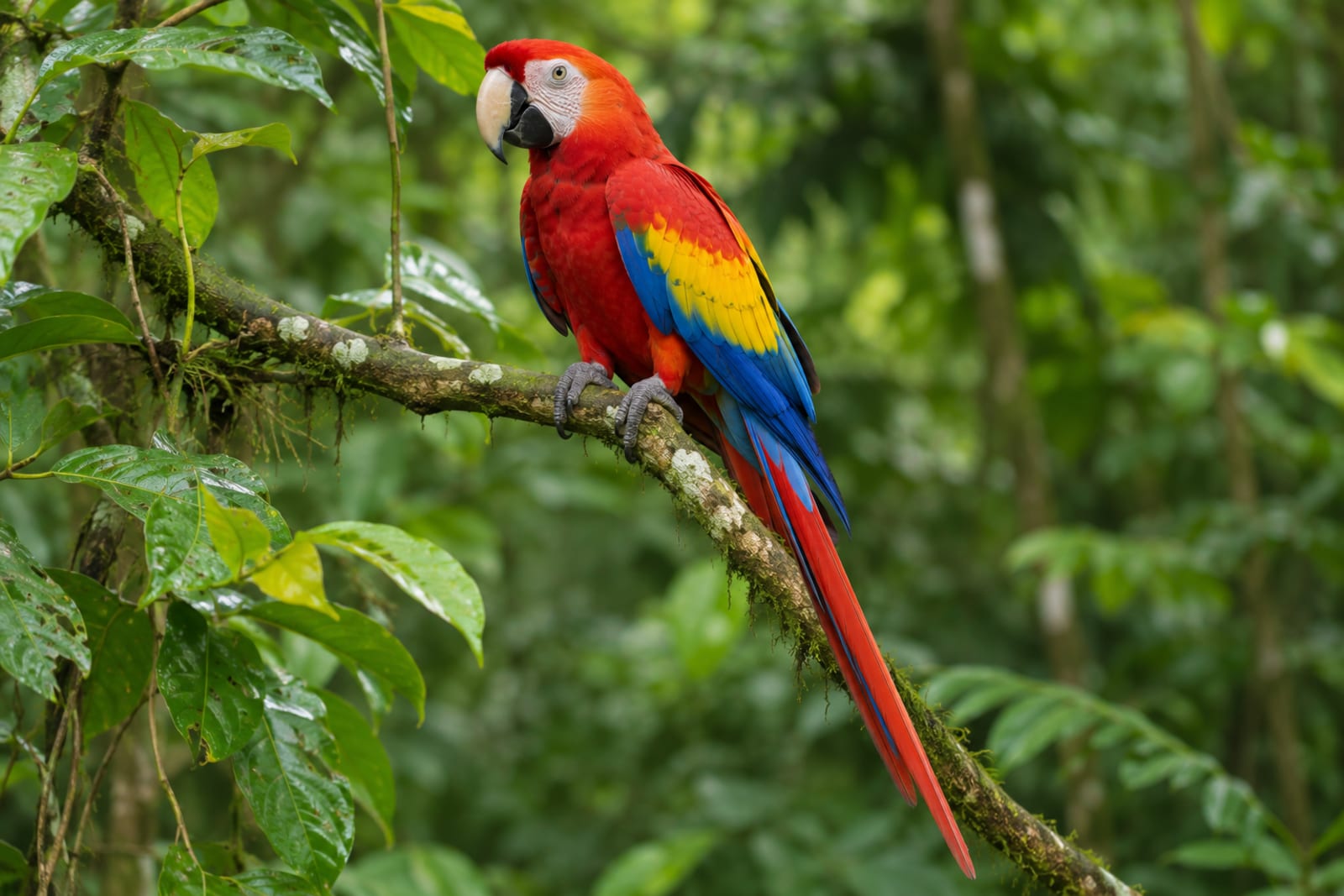
Scarlet macaw
Scarlet macaw
Listen for a rough call, then look for red, yellow and blue sweeping above the canopy. Its powerful bill opens tough fruits and seeds, while cavities in mature trees provide nesting places.
Documented in the Carara area and Corcovado National Park; these area records do not guarantee a sighting.
Trails & Volcanoes ↗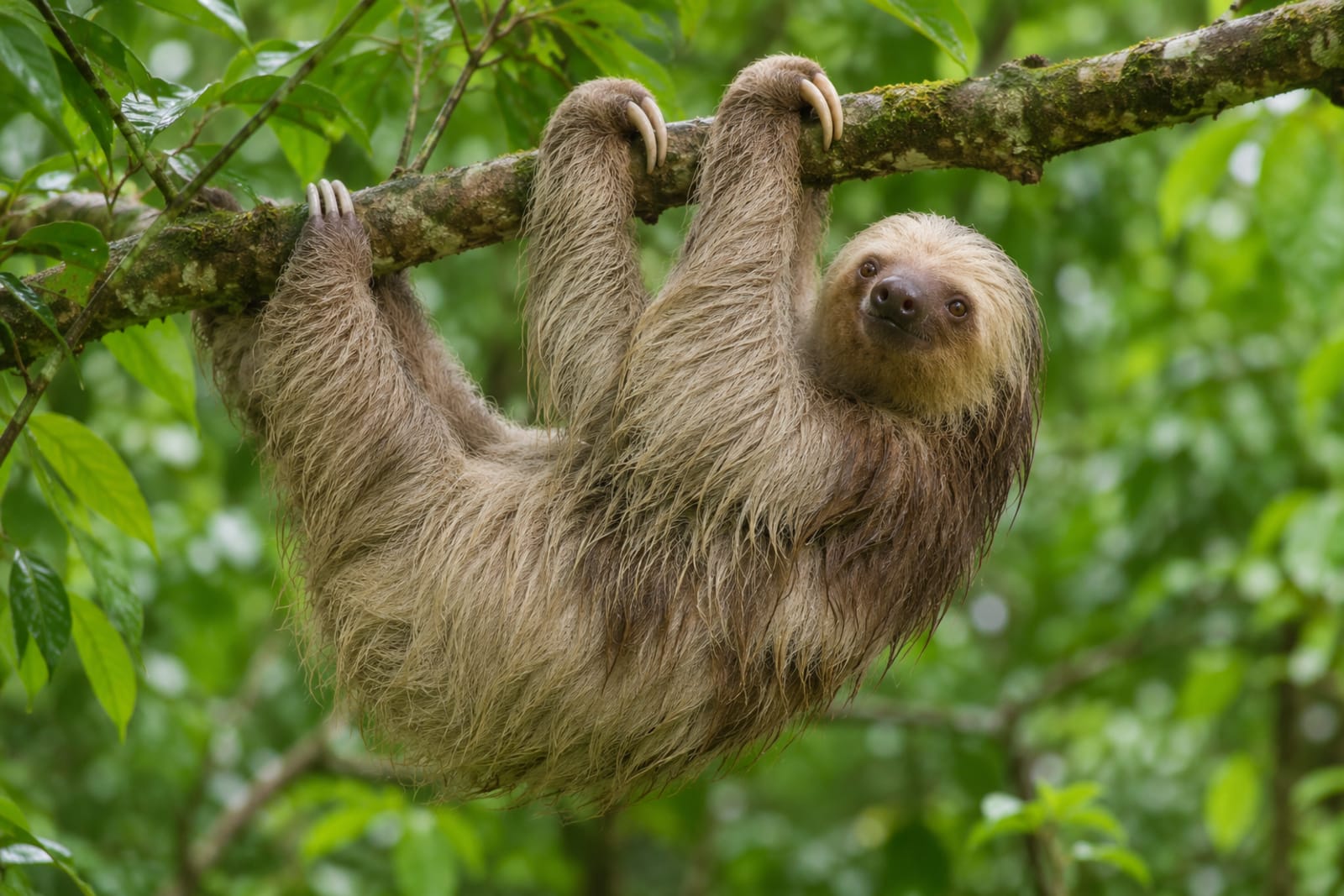
Hoffmann’s two-toed sloth
Hoffmann’s two-toed sloth
A shaggy coat and projecting muzzle distinguish this mostly nocturnal canopy dweller. It often rests high in foliage by day, so a quiet, patient look matters more than rushing along a trail.
Documented by Monteverde Cloud Forest Preserve and Curi-Cancha Reserve; sleeping animals can be difficult to spot and sightings are not assured.
Trails & Volcanoes ↗
Baird’s tapir
Baird’s tapir
Costa Rica’s largest native land mammal explores the forest with a short, flexible snout. Its browsing and fruit eating link this quiet animal to the renewal of the forest, often close to water.
Documented at park scale in Corcovado and Tenorio Volcano national parks, not at every trail or on a guaranteed viewing schedule.
Trails & Volcanoes ↗Travel thoughtfully. Check local access, weather and safety advice. Conditions change, and this guide does not replace professional advice or navigation.
Your next chapter starts here.
A country worth slowing down for. A companion to help you see more of it.